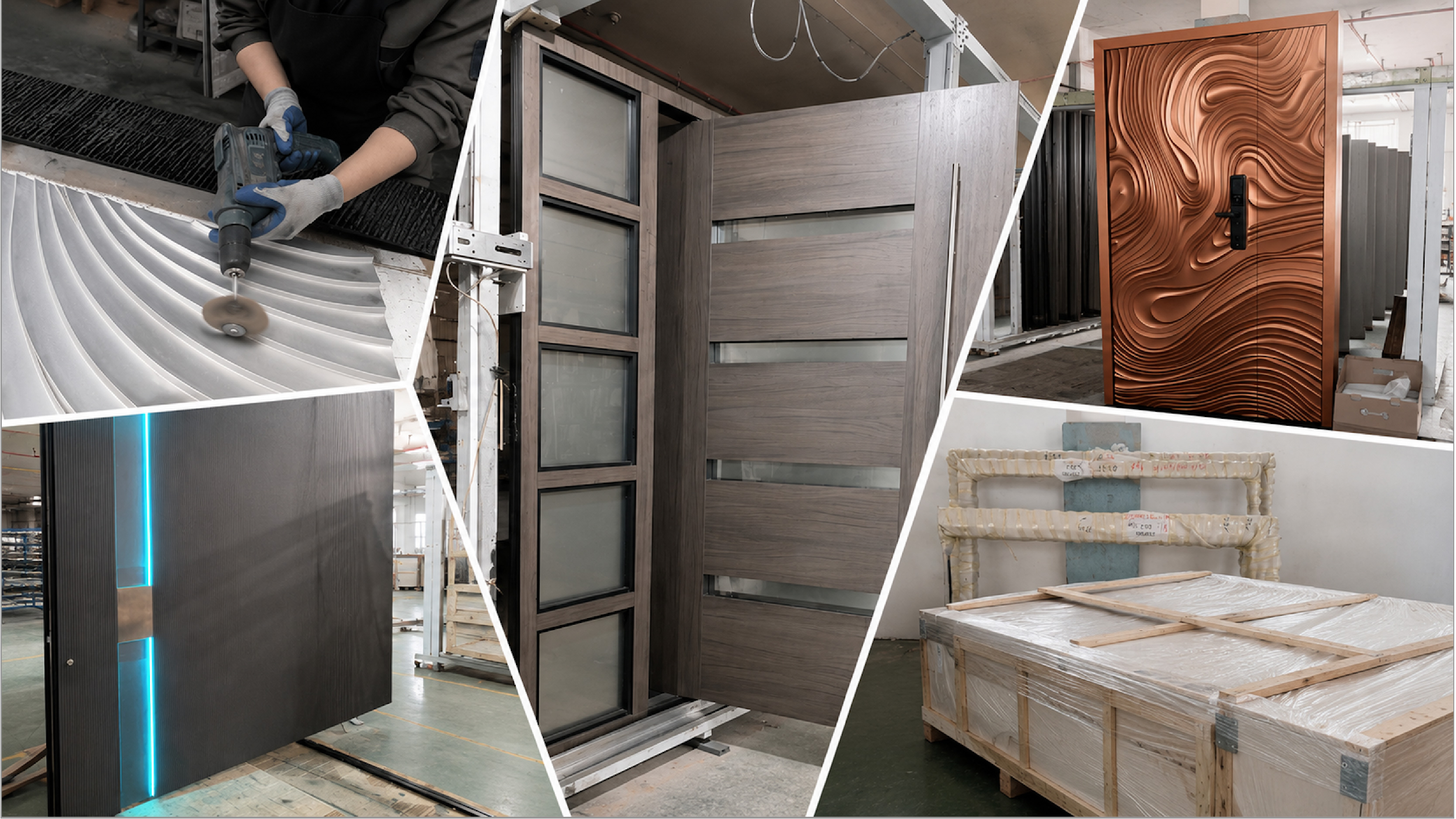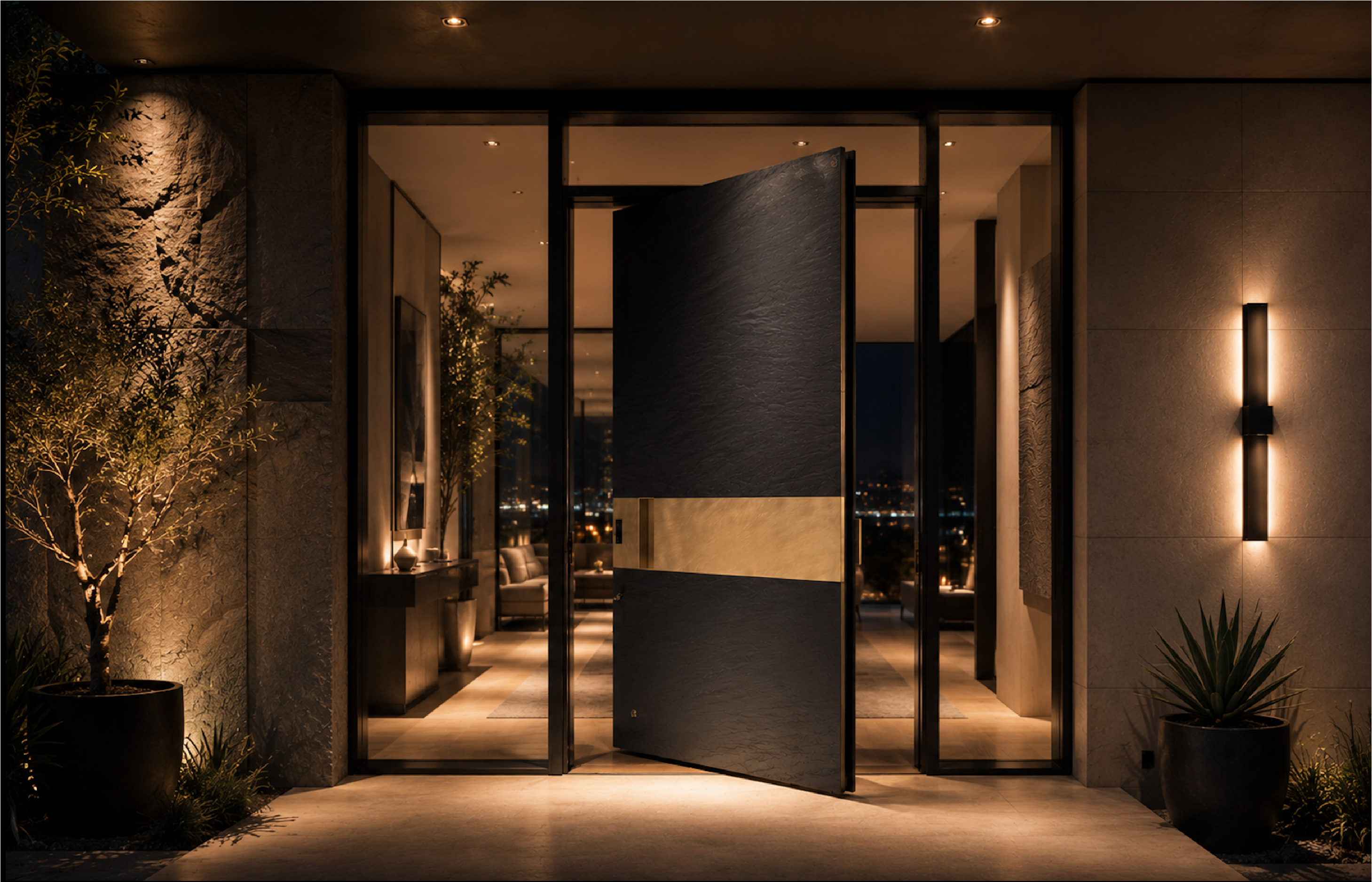
Modern luxury homes are increasingly using pivot doors as a centerpiece of exterior design. Their oversized appearance, clean lines, and architectural impact make them one of the most requested entrance styles in high-end residential projects.
But many homeowners, builders, and architects still ask an important question:
Is a pivot door actually better than a traditional hinged front door?
The answer depends on several factors, including aesthetics, structural performance, insulation, installation requirements, and budget.
In this guide, we'll compare pivot doors and traditional front doors from both a design and engineering perspective to help you choose the right solution for your project.
What Is a Pivot Door?
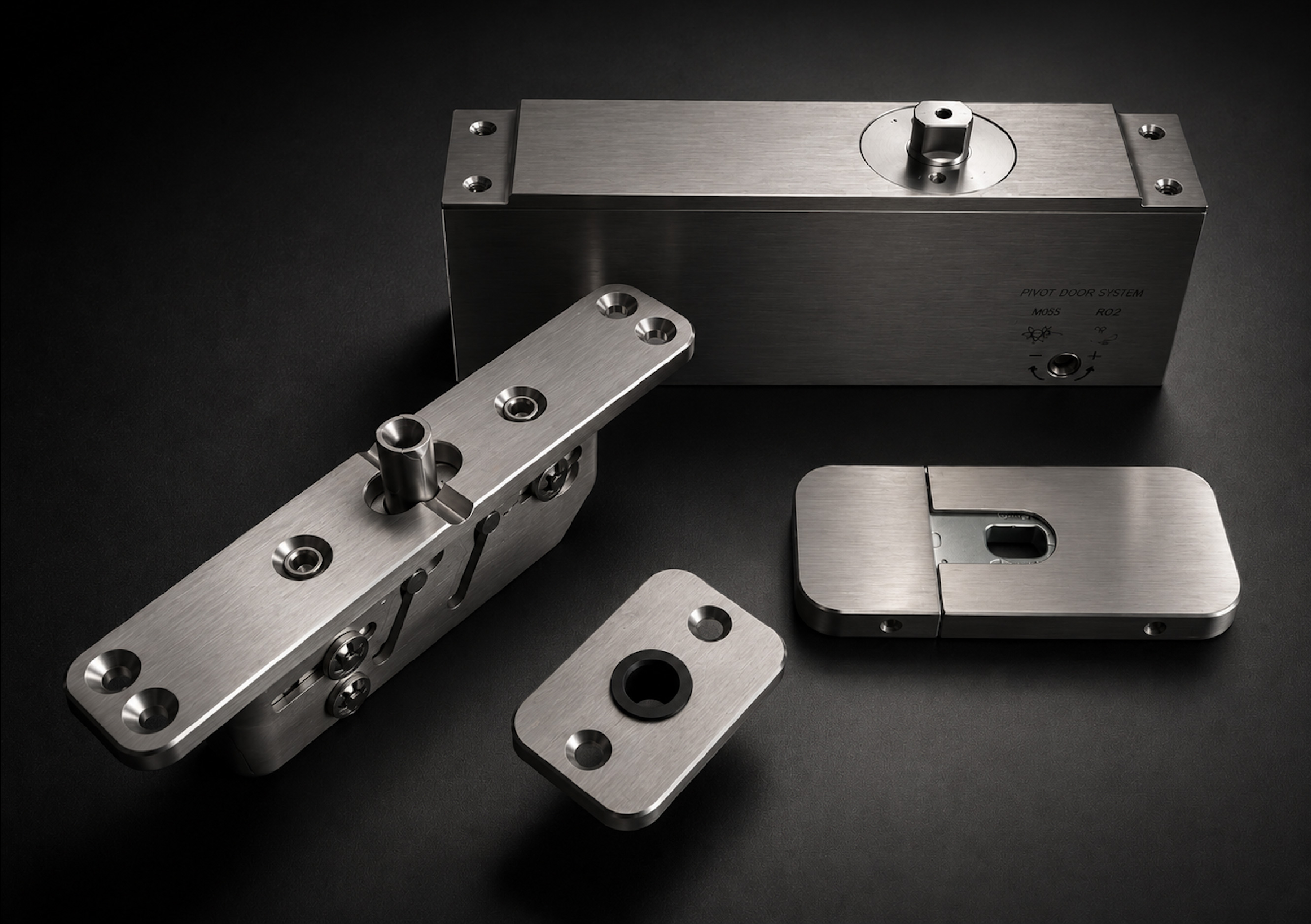
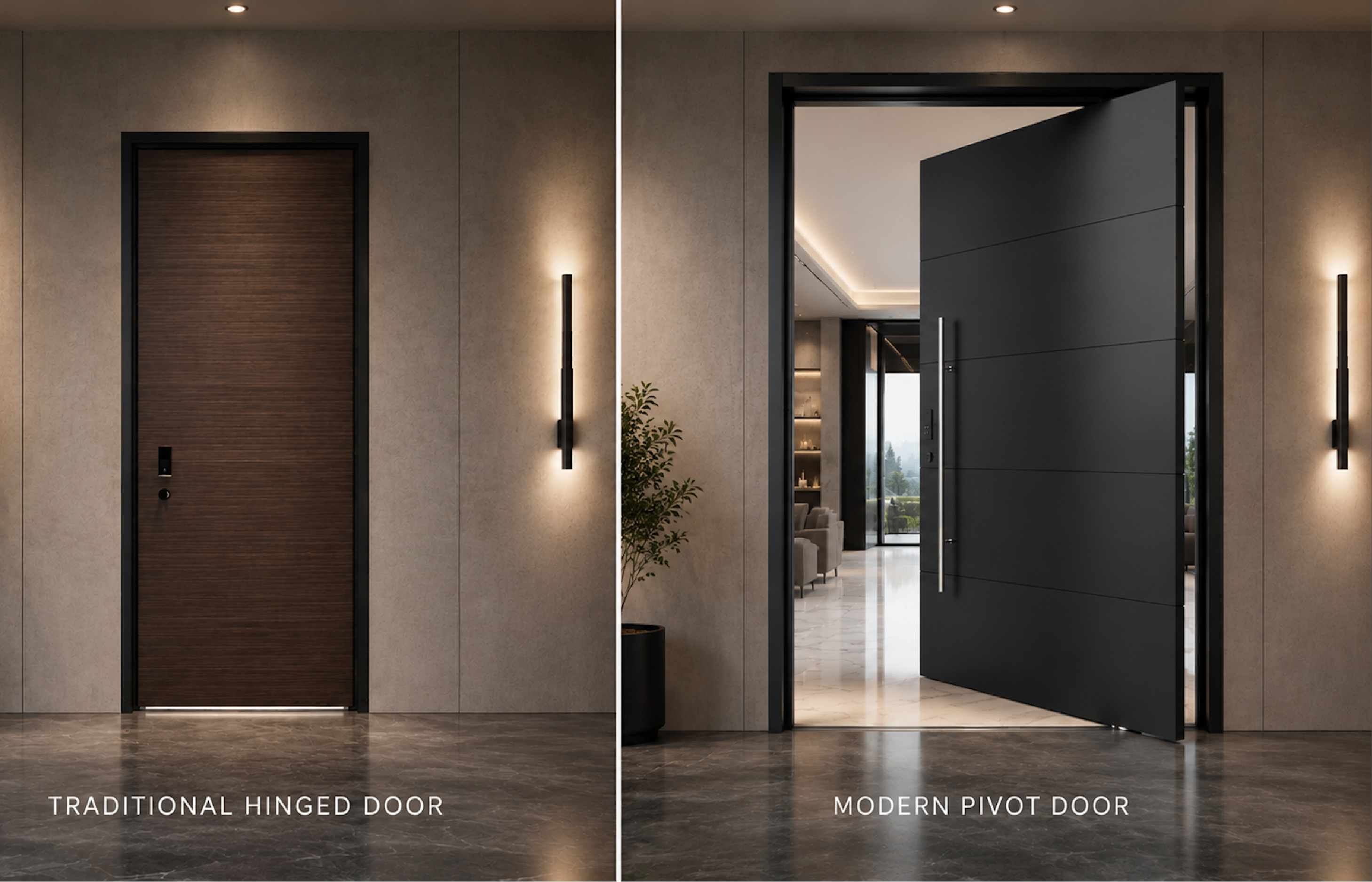
Unlike a traditional hinged door that rotates on side hinges, a pivot door rotates on a pivot system installed at the top and bottom of the door panel.
This system shifts the weight differently and allows the door to support much larger and heavier panels than conventional hinges.
Pivot doors are commonly used in modern luxury homes, large-scale residential entrances, contemporary villas, and custom architectural projects.
Because the pivot point is offset from the edge, the door creates a dramatic floating effect when opened.
What Is a Traditional Hinged Front Door?
A traditional front door uses side-mounted hinges attached directly to the door frame.
This is the most common entrance system used in residential homes because it is simple, cost-effective, easy to install, and suitable for standard door sizes.
Traditional doors remain a practical and reliable option for many projects, especially when oversized dimensions are not required.
1. Aesthetic Differences
One of the biggest reasons homeowners choose pivot doors is visual impact. Pivot doors create a minimalist and architectural appearance that works especially well with modern homes, glass facades, concrete exteriors, and large entry openings.
Traditional hinged doors often suit classic homes, transitional styles, traditional architecture, and smaller entryways.
2. Structural Performance and Stability
Traditional side hinges concentrate weight along one vertical edge. As door size and weight increase, this can lead to hinge stress, door sagging, and alignment problems over time.
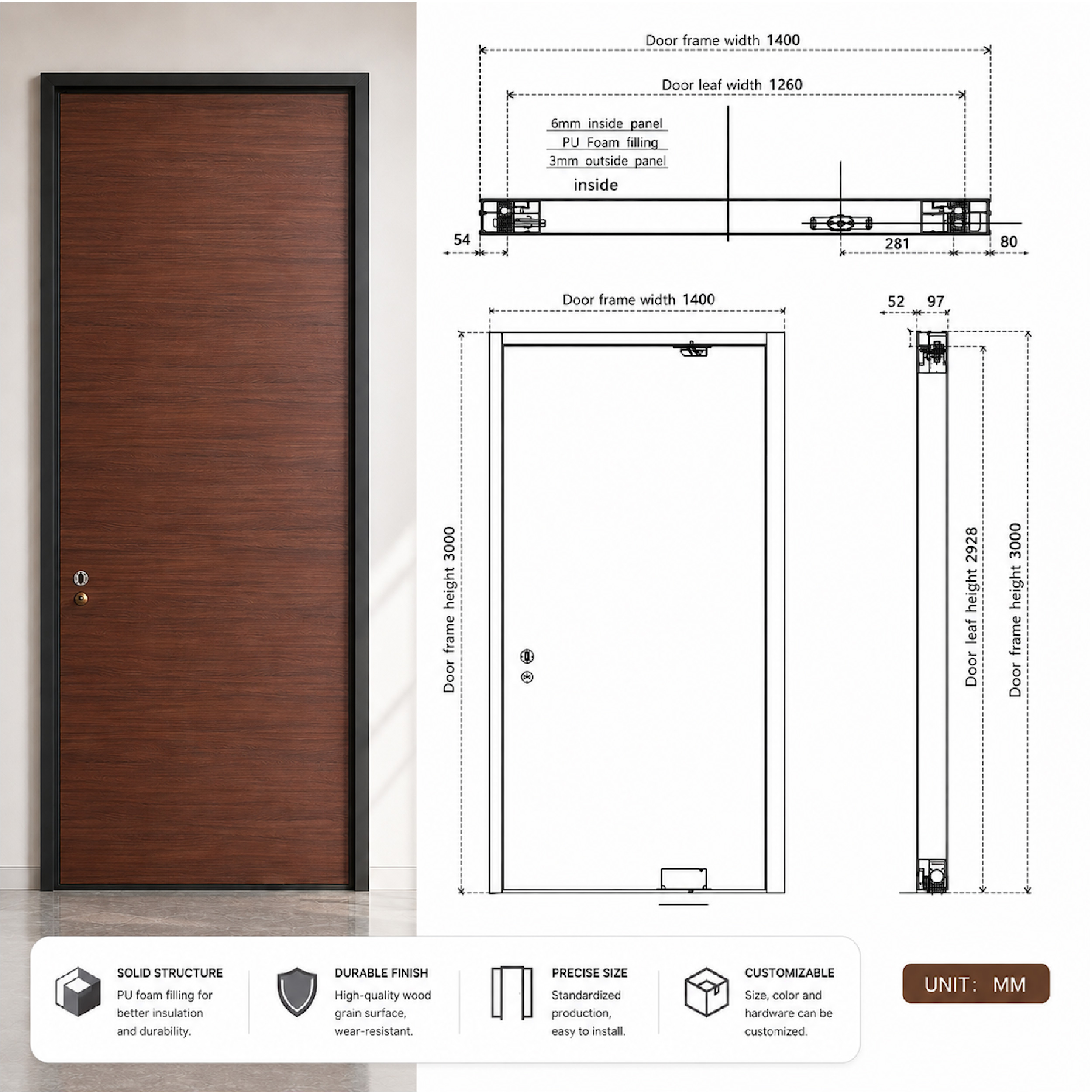
Pivot systems distribute weight differently by transferring load vertically into the floor and header structure. This makes pivot doors better suited for oversized dimensions, thick metal panels, heavy glass inserts, and tall entrance systems.
3. Insulation and Weather Performance
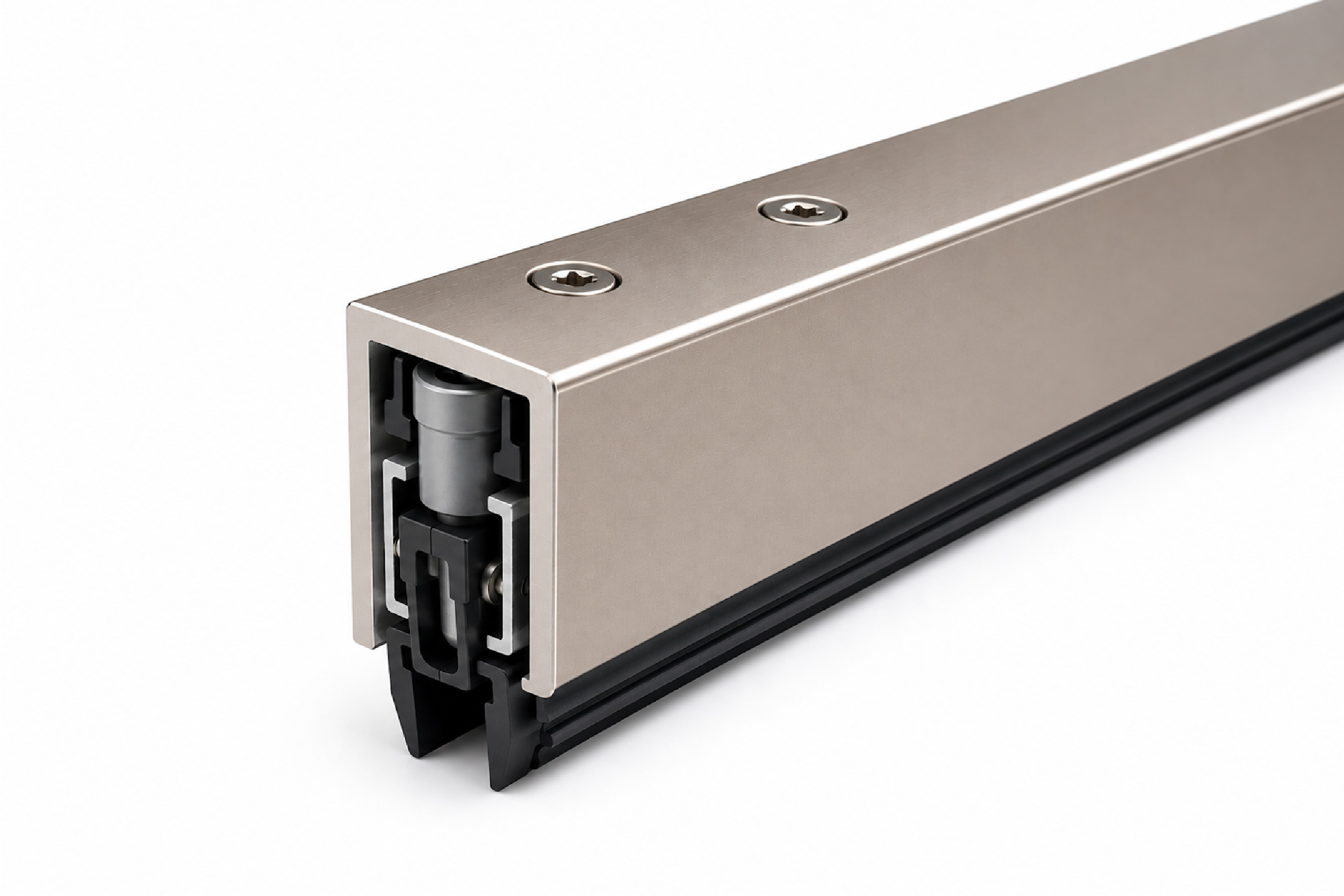
A well-engineered pivot door can achieve excellent insulation performance when designed with multi-point sealing systems, high-quality gaskets, thermal break structures, and precision manufacturing.
Weather performance depends heavily on manufacturing quality and installation accuracy. For coastal areas or extreme climates, proper engineering becomes especially important.
4. Size Capabilities
Traditional hinged doors are usually limited by hinge load capacity and long-term structural stress. Pivot systems allow much larger panels, including extra tall doors, wide single panels, heavy bronze doors, and steel and glass combinations.
5. Installation Complexity
Pivot doors require more planning and precision during installation. Floor preparation, structural reinforcement, pivot placement, weight calculations, and alignment tolerance all affect final performance.
6. Cost Comparison
Pivot doors are usually more expensive because they involve larger materials, heavier construction, specialized hardware, more engineering, and custom fabrication.
For luxury residential projects, the entrance door is often considered a signature architectural element rather than simply a functional component.
When a Traditional Door May Be the Better Choice
Traditional hinged doors may be a better solution if the entry opening is small, the budget is limited, the project uses traditional architecture, or structural modifications are not possible.
Final Thoughts
Both pivot doors and traditional front doors have their advantages. For modern luxury homes, oversized entrances, and architectural statement designs, pivot doors often provide superior visual impact and structural capability.
For more conventional residential applications, traditional hinged doors remain a practical and reliable choice.